

One of the most misunderstood ideas in women’s health is the belief that regular endurance exercise automatically protects against long-term metabolic and cardiovascular risk. On the surface, it looks logical. Many women who run, cycle, or do long bouts of cardio appear lean, fit, and healthy.
But when you look deeper, a different picture often emerges.
Clinically, it’s not uncommon to see women with long endurance histories show elevated cardiovascular risk markers. Blood work may reveal high LDL (“bad”) cholesterol, elevated total cholesterol, and rising A1C (average blood sugar) levels. DEXA (bone mineral density) scans may show acceptable or even low body fat percentages, yet visceral fat is high.
This matters because visceral fat, not visible fat, is what drives cardiometabolic risk.
In these cases, endurance exercise alone is not protective.
The Wake-Up Call: What DEXA and Blood Work Reveal
For women who are generally active, especially those over 35, objective data becomes critical. A DEXA scan can reveal visceral fat levels that aren’t obvious from appearance alone. Blood work can expose insulin resistance or lipid abnormalities long before symptoms appear.
The key point is timing.
It is far better to identify and address these issues at 35 than to wait until 45 or 50, when elevated visceral fat, insulin resistance, and lipid dysfunction are more entrenched and harder to reverse.
This is not about fear. It’s about early, informed action.
The Most Effective Way to Reduce Visceral Fat
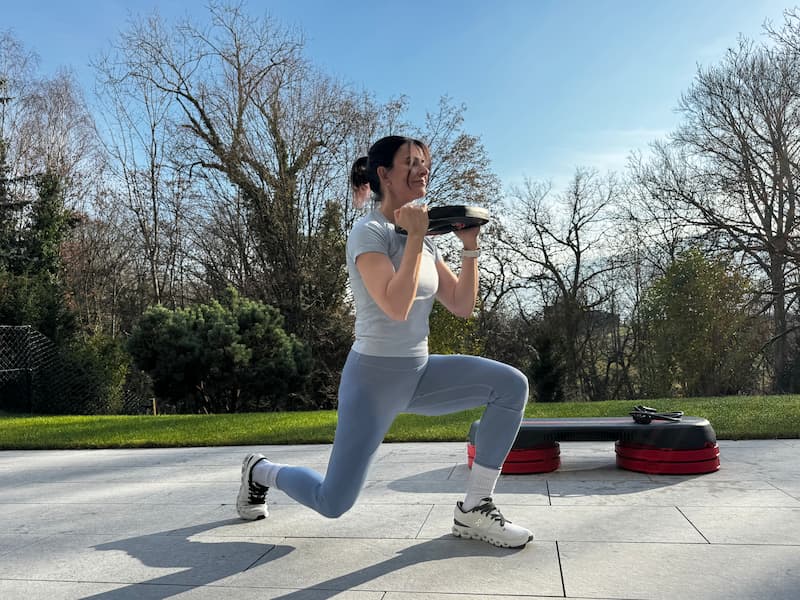
When it comes to losing visceral fat, the evidence is clear. The strongest driver is resistance training, especially when combined with short bursts of high-intensity or sprint-style work.
This type of training creates a powerful metabolic signal. Contracting muscles release myokines – small proteins released by skeletal muscle fibres in response to muscular contractions – which communicate directly with the liver. That signal tells the liver that free fatty acids should be routed toward muscle tissue for use, rather than stored as visceral fat.
In simple terms, the body learns that fat has somewhere productive to go.
Without that signal, excess energy is far more likely to end up stored around the organs.
Why Strength and High-Intensity Training Matter So Much for Women
If you’re looking for the biggest return on effort, the most effective approach is straight forward:
- Lift heavy weights
- Finish with short/high intensity intervals
- Leave the gym
This combination improves insulin sensitivity, reduces visceral fat, supports muscle maintenance, and improves long-term metabolic health. It works for men as well, but it is especially important for women, particularly as oestrogen levels shift with age.
Importantly, this does not mean endurance exercise is bad. It means it should not be the only tool.
The Bigger Picture of Women’s Health and Longevity
For women focused on fat loss, muscle building, and long-term health, the priorities remain consistent:
- Strength training as a foundation
- Strategic high-intensity work
- Clean, nutrient-dense nutrition
- Objective data from blood work and imaging
- Supplements used selectively, not as a crutch
Health is not defined by how lean you look or how far you can run. It’s defined by how your body handles fuel, stores fat, and protects vital organs over time.
The goal isn’t just to look fit now. It’s to stay healthy, strong, and resilient decades from now.