
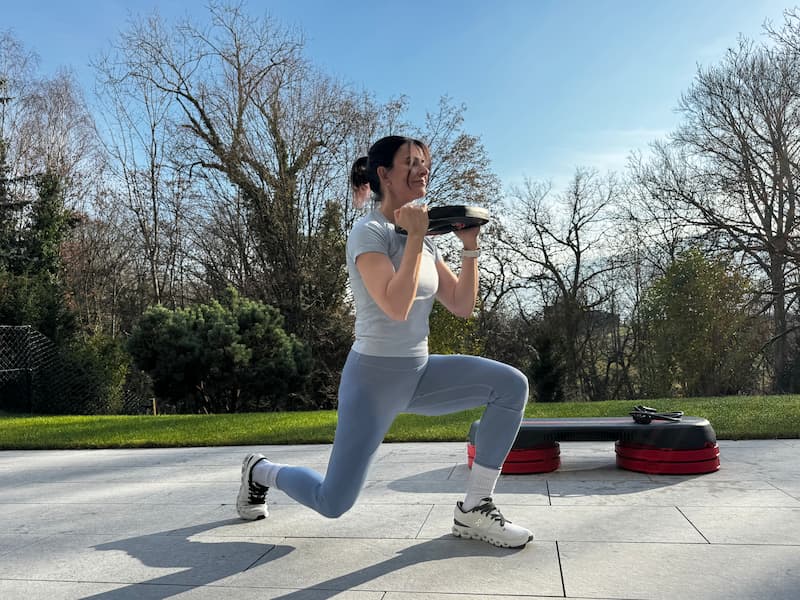

Let’s get one thing clear from the start: there’s a difference between “working out” and “physically moving the body.”
A structured workout routine — one where you’re breathing heavily, sweating, working hard, and feeling some discomfort — awakens a stress response in the body.
When we’re healthy, our bodies can easily adapt to that stress. Over time, this progressive adaptation is precisely what makes us fitter and stronger.
But when we’re sick, the stress of a tough workout can be more than our immune systems can handle.
Still, there’s no reason to dive for the couch the minute you feel the sniffles coming on.
Unless you’re severely out of shape, non-strenuous movement shouldn’t hurt you — and it might even help.
What do I mean by “non-strenuous movement”?
Well, it might include:
- walking (preferably outdoors),
- low intensity bike riding (again, outdoors),
- Yoga.
In fact, all of these activities have been shown to boost immunity.
What about “working out”?
Non-strenuous movement and purposefully working out are different.
Plus, as you probably know, not all workouts are created equal. There are low intensity workouts and high intensity workouts — and all sorts of workouts in between.
But what’s low to one person might be high to another. So how can you decide what level of intensity counts as strenuous?
Let your own perceived level of exertion be your guide.
In general, a low to moderate intensity workout will leave you feeling energized. A high intensity workout, on the other hand, delivers an ass-kicking.
If you’re sick, it makes sense to avoid the ass-kicking.
Let’s take a look at why.
How exercise affects the immune system?
Exercise may play a role in both our innate and our adaptive immune response.
- After one prolonged vigorous exercise session we’re more susceptible to infection. For example, running a marathon may temporarily depress the adaptive immune system for up to 72 hours. This is why so many endurance athletes get sick right after races.
- However, one brief vigorous exercise session doesn’t cause the same immune-suppressing effect. Further, just-one moderate intensity exercise session can actually boost immunity in healthy folks.
- Interestingly, chronic resistance training seems to stimulate innate (but not adaptive) immunity. While chronic moderate exercise seems to strengthen the adaptive immune system.
In the end, here’s the pattern:
- Consistent, moderate exercise and resistance training can strengthen the immune system over time. So, by all means, train hard while you’re healthy.
- But single high intensity or long duration exercise sessions can interfere with immune function. So take it easy when you’re feeling sick.